Sunday, 8 April 2012

Christ is risen

He is risen indeed! Alleluia!

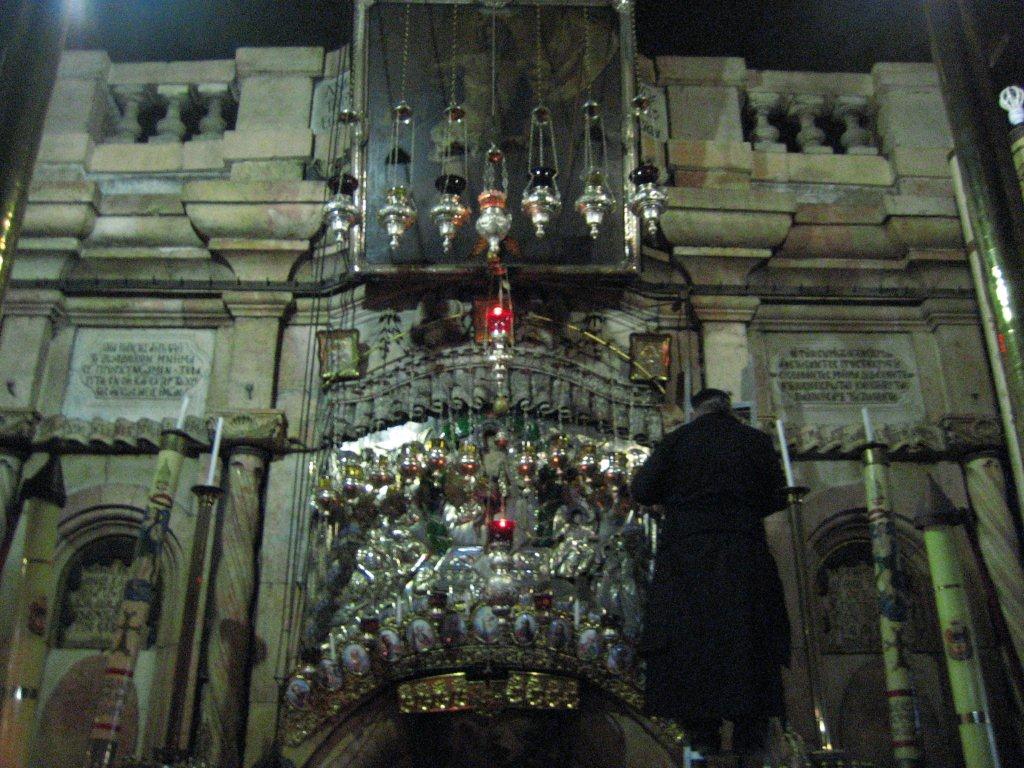
A time to shine the lamps and acknowledge the light...

Monday, 2 April 2012

The hands that build can also tear down


"Six days before the Passover, Jesus went to Bethany, where Lazarus was, whome he raised from the dead..."

In today's Gospel reading, St. John goes on to tell how - at dinner - Lazarus's sister, Mary, came in to anoint Jesus' feet with costly ointment and to wipe them with her hair. "The house was full of the scent of the ointment..."

Yesterday's Gospel of the Palms, read in St. Mark's account, tells how Jesus began approach to Jerusalem "at Bethpage and Bethany, near the Mount of Olives." The two villages of Bethphage and Bethany are only a short distance apart - it would take minutes to walk between them. But now they are divided by the euphemistically-named "Security Wall." In Bethany it cuts literally across the main street. To travel from Bethany into Jerusalem now requires a diversion of several miles around an illegally-built huge Jewish settlement - and then its Palestinian residents would still have to negotiate the Israeli checkpoint.

In Bethany the church depicts Christ's start of his journey down the Mount of Olives. Inside there's a large rock which he's said to have used to get on the donkey - so large it would probably be easier to get straight on!


But the sense of his Passion continued into our own day is still more graphically depicted by the adjacent Palestinian house, demolished by the Israeli authorities - and the other side of the wall.


"For those who still make Jerusalem a battleground, let us pray to the Lord."

Sunday, 1 April 2012

Faith and Fruitfulness


Having returned from pilgrimage to the Holy Land before the beginning of Lent, I still haven’t sorted out the pictures that I took while I was there. I know there’s over a thousand of them. About 200 are on my phone - so I sometimes find myself scrolling through them, generally in an odd moment when I’m waiting to do something else.

I see that the final picture I took is of a man squeezing pomegranates. He’d set up his stall outside the church where we’d held our final Eucharist. And he’d chosen his location wisely. Having had no refreshments since breakfast and nearing lunch, we were a large group of thirsty pilgrims, ready to buy his coffee, orange juice and the juice of pomegranates.

The pomegranate is a delicious fruit. And it has special symbolism in a number of different religions. For the Jews they represented the fertility of the Promised Land. Wikipedia tells us: “It is traditional to consume pomegranates on Rosh Hashana (the Jewish New Year) because the pomegranate, with its numerous seeds, symbolizes fruitfulness. Also, it is said to have 613 seeds, which corresponds with the 613 mitzvot or commandments of the Torah. And they’re a frequent decoration - in the Temple, on the hem of the High Priest’s robe, perhaps a model for Solomon’s crown.

They’re symbolic also in Christianity, often woven into the fabric of vestments and liturgical hangings. They’re found in the paintings of Botticelli and Leonardo da Vinci amongst others, and placed in the hands of the Virgin Mary and the child Jesus. The fruit, broken or bursting open, is a symbol of the fullness of Jesus' suffering and resurrection.

It’s significant that this was the last picture I took - the place was Abu Ghosh, the likeliest location of Emmaus, the village to which two disciples walked on Easter Day when they were joined by Jesus. They failed to recognise him until they had invited this stranger encountered on the road into their house - and there he broke bread. Then it was they knew him to be the Risen Christ.

At Easter we are called to recognise the fruits of Christ’s work for us, his love shown upon the Cross, his sacrificial death - and the power of the Resurrection. I was glad that our pilgrimage ended in Emmaus - the place where the risen Jesus was seen and known. Let’s pray that his love for us may be a reality which we find at work in our lives.


And meanwhile our Parish Website - with details of Holy Week and Easter - has been updated.

Wednesday, 28 March 2012

Covenants - Anglican and God's

It was somewhat appropriate that the Lectionary Readings for Sunday reminded us of the  nature of the New Covenant promised by God - certainly it enabled me to reflect on what seems to be the end of the process within the Church of England in the quest for a Covenant for the Anglican Communion. Here's what I preached - the readings were Jeremiah 31.31-34; Hebrews 5.5-10; John 12.20-33...


Here are some words from today’s first reading - from the prophet Jeremiah:

The days are surely coming, says the LORD, when I will make a new covenant with the house of Israel and the house of Judah.

Perhaps we need to ask ourselves what a “covenant” is? The term can be used in different contexts. During the 1980s and 1990s perhaps churchgoers heard less about the biblical use of the term than about a “covenant” as a financial device. If you took out a “covenant” with a church or a charity - agreeing to pay so much money to that church or charity over a minimum period of time, say four years - then the church or charity could reclaim the tax you’d already paid on that sum of money. You can understand the appeal this sort of covenant held: the church or charity was promised committed giving over a particular period, and it got even more money back by reclaiming the tax from the Inland Revenue.

 These days it’s easier. You can “Gift Aid” your giving. You don’t have to say how much in advance you’re going to give - and you’re not committed to giving for any fixed period. If you’re a tax-payer and you don’t already “gift aid” the money you give to your church, then please start doing so - it costs you nothing more than what you would give anyway, and the church gets another 25% back in tax from Her Majesty’s Revenue and Customs. The same for charities. We should all think of how much we can give away of our income - and when we give, every tax-payer can make their money worth still more to the charity that benefits. If - after last week’s Budget - you think you’re paying too much tax, then remember that giving by “Gift Aid” enables you directly to decide where some of the tax you’ve paid should go - whether it’s to your church or to the charities you support. Our Treasurer can tell you more!

 “Gift Aid” has replaced covenants as a means of making charitable giving worth more. But the term “covenant” remains a legal term where someone is bound to do something. A “covenant” can be part of an agreement dictating terms for repayment of a loan. Buildings and land can have covenants placed upon them which restrict the way they can be used. You can make a covenant which is of legal benefit to members of your family.

 But the origin of the term is religious. When we say that the Bible is made up of the Old Testament and the New Testament, you could replace the term “Testament” with “Covenant.” So the Old Covenant is about God’s interaction with his people, the Jews. There’s a covenant with Noah after the Flood, that never again will God bring destruction upon his people in such a devastating form. There’s the covenant with Abraham where God promises that Abraham’s descendants will be a people for whom he will have special care. And there’s the covenant which God makes with Moses when he gives his people the Torah - the Law - on Mount Sinai. As for the New Covenant it’s still more far-reaching. The New Covenant is made between God and all people through the work of Christ on our behalf. God calls everyone to be his people through the life, death and resurrection of Jesus. And a Covenant is binding. To benefit from it we simply need to see that we are included - that God is calling to us.

 So Jeremiah speaks of God promising to make “a new covenant.” We need to read these words of today’s Old Testament Reading - and see how they apply to us.

 I’m afraid often, though, we just don’t act as if they really do apply to us. God is calling to us - to me… He’s inviting us to be his people. And we miss what he’s saying. Or we mis-hear what he’s saying. We can’t believe that we’re included. Or we think that if we’re involved, then other people should be left out. I’m afraid there’s been a process going on in the Church of England and the wider Anglican Communion over recent years and months which has been taking almost exactly that approach. It’s the move to create a “Covenant” for the Anglican Communion. In other words to come up with a form of words which every Church within the Communion should sign up to - the aim is to give a sense of what we hold in common, to have something we all agree upon. The problem is that we don’t all agree - so inevitably some Churches are going to get left out. And a further problem is - I’m afraid - that God himself is in danger of being left out. A Covenant in the sense it has in the Bible is not just an agreement made between people, however legally binding it maybe and with whatever good intention it might have of holding as many people together in unity. A biblical Covenant is always between God and his people. It’s about what God does for us - and what God promises for us.

 In fact we now know that the proposed Covenant for the Anglican Communion isn’t going to happen - or at least it’s not going to include the Church of England, so it’ll be a very strange Anglicanism that it could be left to propose. As of yesterday, a majority of Diocesan Synods voted against the so-called Covenant. So there’s nothing the General Synod can do to make it happen.

 Some people are really pleased about this - and are pretty-well literally trumpeting their glee. I’m glad it’s not going to happen. We should be held together by something more than paper agreements. But I don’t think we should now be rubbing a sense of triumph into the wounds of those who had proposed the Covenant. In a sense it’s a defeat for the Archbishops of Canterbury and York, who had both wanted the Covenant for good reasons - they wanted people to continue talking to each other; they wanted a Church where Christians are held in Communion - where Episcopalians from America can get on with Anglicans from Nigeria, where the radically conservative Diocese of Sydney can recognise the radically liberal Diocese of New Hampshire as an integral part of the Body of Christ; they wanted a sense of boundaries so that people could both know how far they can go and also be given the space to live out their witness.

But hopefully now - with the Anglican Covenant dead in the water - we can go back to recognising what the true meaning of “Covenant” is. We don’t need the one that was proposed because already we have a Covenant made with God through Jesus. And it’s something always new. In the written form of the Old Covenant - in tablets of stone given to Moses - it was all too easy to break. Even God can’t provide us with the legislation we need to be able to live in righteousness. Instead he tells us,
 
this is the covenant that I will make… I will put my law within them, and I will write it on their hearts; and I will be their God, and they shall be my people…
 
Can we believe that? We need hearts that are open to God, not documents telling us the limits to which we will hold each other accountable. We need not to be telling each other off, but hearing what God is saying to us. We need not effective sanctions, but the recognition of forgiveness. “I will forgive their iniquity, and remember their sin no more.” That’s what God says to us - we are forgiven. And our calling is to live in charity and unity with other Christians with whom God shares that forgiveness equally.

 The next two weeks - which the Church calls Passiontide - are a time for recognising that our best human efforts always fall short. We can’t win salvation for ourselves. We can’t put the world to rights by what we want and what we want other people to do. We can’t do anything to make ourselves worthy recipients of God’s love.

 We can simply know that God loves us. He writes upon our hearts. And when he calls us, it is with a call to follow the way of Jesus. It’s a way which will lead Jesus to the Cross - and to seeming defeat. But only through his death can the way be opened to new life in the power of his Resurrection. In Jesus’ own words:

Very truly, I tell you, unless a grain of wheat falls into the earth and dies, it remains just a single grain; but if it dies, it bears much fruit.

Friday, 2 March 2012

From Pilgrimage to Pilgrimage


I was in the Holy Land for 10 days in February - the first time I'd been back since living in Jerusalem for 9 months in 1977 - 1978, a "gap year" between university and theological college. It's going to take some time before I can properly absorb all the experiences of just over a week into which we packed so much. All credit to our leaders, Dominic Barrington, Robert Lawrance and Paul Kennington - and to Lightline Pilgrimages!

I took an excessive number of photographs! - and still haven't had time to sort them out. The first one (of over a thousand) above this text made me think. Had I taken the picture by accident? Obviously it's a picture taken through a rain-flecked bus window, but why is its apparent subject a modern housing estate with traffic island and road markings to boot? I had to look more carefully. The clue is in the background - it's a hill, more specifically Mount Tabor, traditionally identified with the Mount of the Transfiguration.

Special place as it is, the site of something sacred is in the midst of the  everyday. I'd been to the bottom of the hill in 1978 - during a day trip out of Jerusalem to the Galilee. It'll take too long to go up there, said the driver that day. If we go up there'll we'll have to miss something else out - like Nazareth. 34 years later I've now been up the hill. The temptation at the top was to start clicking away with my camera - to rush around looking at the sights. But our leaders wouldn't let us go straight into the church. We had to pray first - as we did round an outside altar at our first Eucharist of a wonderful pilgrimage. It was to be the pattern for the rest of our time together. Pray first, then look.

I'm back into the everyday busy-ness of parish life now, rather like the disciples who accompanied Jesus at his Transfiguration had to go back down the mountain. But it's time for another pilgrimage - through Lent. We can make our pilgrimages wherever we may be. But sometimes we have to go some distance and return to discover it...


Meanwhile I've been catching up with updates to our parish website. Our new Parish Magazine for March has been uploaded. And there are a number of new sermons / homilies which you can access from the dedicated page on this blog - my most recent offering, for the First Sunday of Lent is here.

Saturday, 4 February 2012

Change of title

This Blog's web address is the same as it was, but I've just changed the title. It doesn't really require the question mark, because my parishes are indeed on the North-West edge of both the Diocese and the County of Durham. But I've put it in for the moment lest people object to any perceived overtones of lawlessness and rebellion - as if!

The main reasons for change were these:
1. Just the name of my parish standing alone as a blog title is a bit boring!
2. In the last few months I've acquired another parish - so in addition to St. Cuthbert's, Benfieldside (which is in Shotley Bridge, but also serves Blackhill and Bridgehill), I now serve also as Priest-in-Charge of the Parish of St. John the Evangelist, Castleside - this has the merit of being in Castleside itself, though it serves a wide area including Moorside, The Grove and the smaller rural communities of Rowley and Healeyfield.

I still live in Shotley Bridge - which for Castleside is a bit problematic, because it's 3 or 4 miles (depends on which way you travel) from the Vicarage, and the more recently-arrived town of Consett has grown up in between. Between the two parishes there's a choice of routes. The most attractive and shortest is along the valley and then a steep haul uphill, but it's also most likely to be snowed-under, iced-up or flooded. The easiest is also the longest via Consett and its by-pass; this requires gaining even greater altitude before losing it. In between I can cut through the estates of The Grove and Moorside, but this route is blessed with more speed-bumps than my car's suspension can really stand.

Still, I like it that both my parishes are on the edge. Admittedly we sometimes feel a bit forgotten by the centre. But we possess riches and beauty which the centre itself may simply not appreciate. And "edginess" is not a bad thing if it challenges complacency.

My main problem at present is simply workload: how to avoid doing everything twice, as well as dealing with parishes which have a population of about 15,000. Hence the lack of blogging. And sometimes it feels there's not much time to think... That's one of the reasons why I haven't included a customary "Vicar's letter" in the new February edition of our Parish Magazine - but I have printed our Bishop's New Year message, and there's a lot more, so please have a look anyway!

You can find an archive of the Magazine by going to the dedicated page on this blog - and you'll find a selection of sermons there too...

On the whole this is still very much about St. Cuthbert's. But service details for St. John's are now in the bar on the right of this blog page, as well as a link to its website. Hopefully more to follow.

Monday, 5 December 2011

Seasonal News from St. Cuthbert's...

... can be found in the December-January double issue of our Parish Magazine. It's now available in print - or you can find it online by clicking here. I'm copying the "View from the Vicarage" page into this post, but do have a look at the rest of it.

Our main services for the end of Advent and Christmas-tide are listed on the right-hand side of this blog - full details also in the Magazine, on our website and on the Parish Christmas Card, available both online (so you can print your own) and on heavy paper! For good measure here's the Christmas advertising poster too (in duplicate!).

Meanwhile, from the Magazine -

Christmas…

… started early for me this year. I try to resist singing Christmas Carols as long as possible - not because I’m a natural curmudgeon, but to save myself up for Christmas when it comes. I really do enjoy making a real start with our Christmas Eve Carol Service when we bless the crib, going on to celebrate the First Eucharist of Christmas at the Midnight Mass.

But this year the lighting of the Shotley Bridge Village Christmas Tree was accompanied by Carols. I turned up to bring the carol sheets and to shout out which we’d sing next. I needed to shout. The crowd was well into three figures - and enthusiastic. “We’ll treat this as a rehearsal,” I yelled. “Come back and sing some more nearer the time!” So I hope the outdoor singers will be back at the tree on Tuesday 20th December - and giving them old copies of a Christmas Eve Carol Service, I hope they’ll note the time and day to turn up in church in droves for the Christingle!

It was great fun. And continued throughout the “Victorian Christmas Spectacular” the next day - with many turning up to make our Christmas Fair so successful.

Now for Advent! That’s the real time of expectation - the not-just-yet of Christ’s coming… And what do we expect of him? So much about the Church seems bad news, at least when the media lays hands on it. So I’m pleased to carry the item on page 19, examining some statistics which bear on the Church’s life: finances and ordinations are holding up, which doesn’t mean we can be complacent, but which is evidence of faith in hard times.

Christ’s is a birth in hard times. And through it there comes hope for a troubled world. The candles we use in the darkness of Christmas services are a sort of symbol that glimmers of light may shine brightest.

A very joyous and holy Christmas to you all, and a blessed and peaceful New Year!