Wednesday, 25 December 2013

Christmas at St. Cuthbert's


Every seat taken - and quite a number standing as Christmas celebrations began at St. Cuthbert's.

We wish you a very happy and blessed Christmas!

Monday, 23 December 2013

Getting ready for Christmas


Sorry there hasn't recently been time for posting on this blog. Another way you can keep up-to-date is through our new Facebook page.

We're making final preparations in both churches for the celebration of Christmas. I've just left Rainbows, Brownies and Guides who are making massive numbers of Christingles for use at St. Cuthbert's Christmas Eve Carol Service - 6p.m. 24th December. It's followed by 11.30p.m. Midnight Mass - and a 9.30a.m. Eucharist for Christmas Morning.

St. John's, Castleside had a well-attended Carol Service (again with Christingles) yesterday evening. Celebrate Christmas there with a Vigil Mass at 8p.m. on Christmas Eve. and a 10a.m. Eucharist for Christmas morning.

Thursday, 5 December 2013

He became poor that we may be rich…

These are words of a gentle meditation from the Iona Community which we’ve used to begin our Christmas Midnight Mass. And once they’re sung - and we’ve followed them with “Once in royal David’s city” - we begin the liturgy itself:

Welcome all wonders in one sight!
Eternity shut in a span.
Summer in winter, day in night,
heaven in earth and God in man.

Great little one whose all-embracing birth
brings earth to heaven, stoops heaven to earth.

They’re words of beauty which express the deepest truth. So much else about the traditional celebration of Christmas resonates in our hearts from lullabies like the “Rocking Carol” and “Away in a Manger” to the raucous cheerfulness of “God rest ye merry, gentlemen.”

But there is the celebration of Advent beforehand - and it can introduce a note which jars or trips us up. I’m always challenged by the appearance of John the Baptist in his way of proclaiming Christ’s coming. The hymn “On Jordan’s bank the Baptist’s cry” is not at all Christmassy - this year I’ve been pulled up short by this verse:

Stretch forth thine hand, to heal our sore,
And make us rise to fall no more;
Once more upon thy people shine,
And fill the world with love divine.

The “sore” is the frailty of our human condition. It obviously troubles some hymn book compilers who give a different rendering of this verse. It’s the wound which saps our energy and leaves us failing in our endeavours. It’s something more than “sin” - itself a misunderstood concept. “Our sore” needs to be acknowledged if it is to be healed: ”Lord Jesus Christ, Son of God, have mercy on me, a sinner,” asks the Jesus Prayer. It’s knowing what we are that we can find the grace to become what we might be.

And Christmas shows us how that can be. The love of God, reaching down to us. God’s Son taking human flesh to touch and heal us. We need the opportunities to acknowledge what we are before God: what we lack; what we might be with his help. And he doesn’t leave us simply to struggle with that knowledge. In Jesus he meets us in our need.


This is the "View from the Vicarage" in our current Parish Magazine - click to read it online. You can also find our Parish Christmas Card in print-it-yourself format - with details of Christmas services.


Tuesday, 29 October 2013

Putting Priorities into Practice…

One of the great things about St. Cuthbert’s is that we have meetings which are both positive and productive. Last month we tried a new style of meeting for our PCC members - to ask what direction we should be taking as a church and how to get there. It entailed giving up a Saturday morning but I was cheered and encouraged both by the attitudes throughout the meeting and in seeking an effective outcome. Rosie Junemann, Liz Parker and Carol O’Malley all have articles in the November edition of our Parish Magazine recording what went on and reflecting upon the issues raised.

Our reason for meeting was to build on the Diocese’s initiative, “Preparing the Ground for Growth.” How can we join in? What are the Strengths, Weaknesses, Opportunities and Threats that we need to deal with? And how can we then move forward? We identified two priorities in particular upon which we wish to take fresh action: (1) to become more confident in the basics of our faith; (2) to be renewed in the life of prayer.

These are not priorities only for the Parochial Church Council to do something about. We see them as basic to what we are about as a church. Unless we are grounded in the basics of our faith, then we’re not going to be very confident in sharing it with others. And our calling is to be a church with a praying heart so that we may know God’s purpose for us as his people.

And we need to act on these priorities. Just how we’ll work them out is a medium to long-term issue. But we can make a start straight away - and we’re going to do so this month. So on three Tuesdays of November there’s an invitation to come to the Vicarage to start looking at the basics of faith - perhaps we’ll need to ask what are the basics; so we need everyone’s contribution to identify those areas where we need to grow our faith. And on Monday 11th November our church will be Open for Prayer from 2 to 3p.m. -  and hopefully on the second Monday of each month thereafter. Yes, you can pray at other times and in other places. But this is to join in a shared objective. You don’t need to stay the whole time - but come for as long as you can, and see what you discover!                 

 
Open for Prayer:
2 to 3p.m  Monday 11th November - in church
 
Basic Belief - what do we believe as Christians?
7.30p.m. Tuesdays 5th, 12th & 19th November - in the Vicarage

Monday, 14 October 2013

Vulnerability, defensiveness and love


There are many reasons why people put off going to the Doctor’s. “I’ll probably be better by the time I get an appointment,” you might say hopefully. Or there are the questions the doctor is going to ask about how you’ve been looking after yourself: just how much exercise do you take? – have you given up smoking yet? – what’s your diet like? – how many units of alcohol are you consuming every week?... and many more potentially embarrassing questions - and you wonder just what you’re going to have to have to admit to.

And then there’s the fear of what the doctor is actually going to do to you. Which bits is he/she going to prod and feel? What am I going to have to reveal of an anatomy of which I’m less than proud? And after all that, what might the treatment involve? – alright if it’s a course of antibiotics, but what about hospital referrals, long courses of drug therapy, operations, the bits which might be unlovely but which we don’t want to live without? 

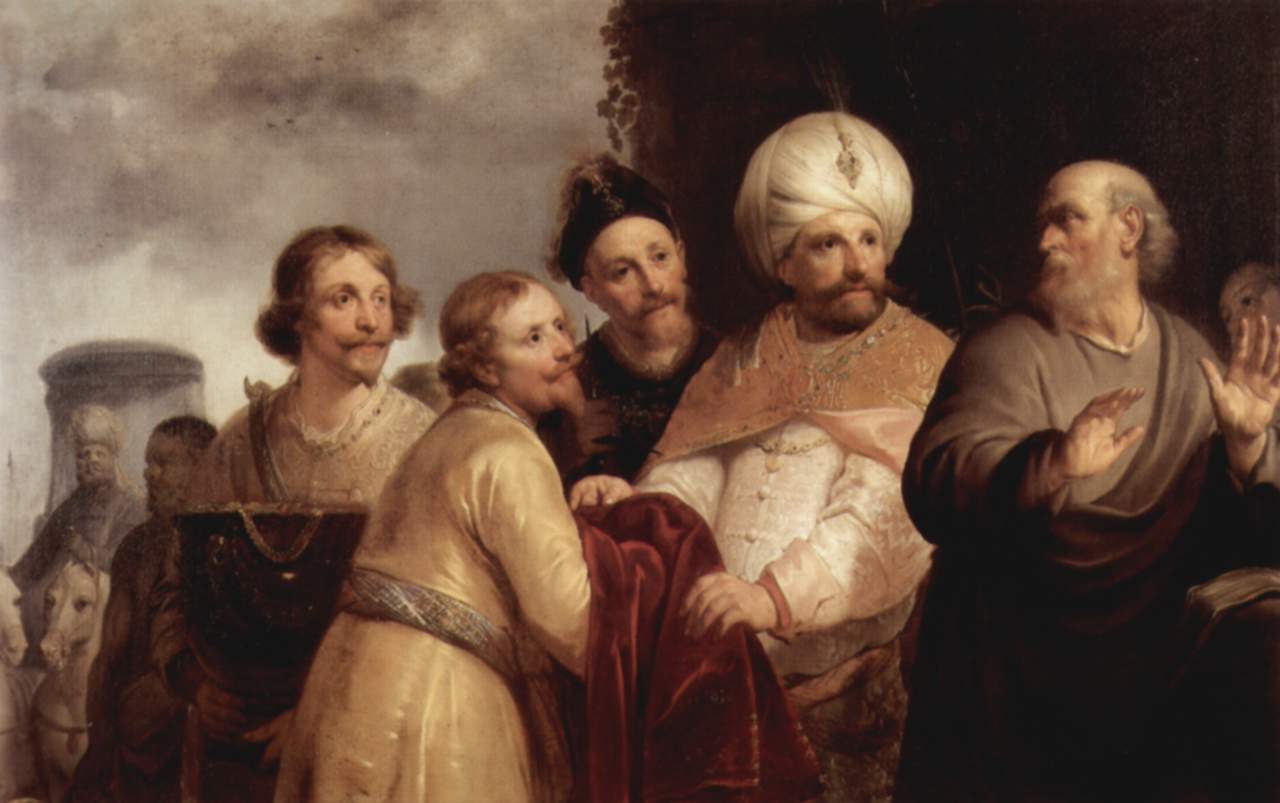
 Now try to think what might be in the mind of Naaman, the commander of the armies of Aram (modern day Syria) as he looks for a cure for his leprosy. It wasn’t newly diagnosed,… it was something he seems to have lived with for a long time. He’s a high-ranking General - despite his illness. He’s learned to live with the disease – and perhaps we need to be reminded that what the Bible calls leprosy is not necessarily what we call leprosy (Hanson’s Disease), but was a catch-all term for a number of skin disorders. How many doctors had he seen in his own country, how much indignity had he been put through? – all to no avail, as he continued to suffer a disfiguring condition which didn’t sit at all well with his public prominence.

Naaman seems to have given up hope of a cure. Why should he want to put himself through any more prodding or lay himself open to any more useless courses of treatment? The suggestion that he turns to the prophet who lives in Israel is a last chance for him, an alternative therapy of which he seems highly sceptical.

Naaman goes seeking his cure in the way a General would. He takes his dignity along with him in a big way: piles of silver, loads of gold, fine clothes and a letter from his king – this is the reward for the man who can heal him. But a man who can arrive in this fashion is also a threat. The King of Israel sees the horses and chariots which accompany Naaman: “Now we’re in trouble,” he says. “There’s no hope of a cure. The doctors have never been able to do anything for him. He’s obviously just picking a fight!”

But what Naaman needs is not what kings and generals expect. He goes on to the house of Elisha the prophet, and finds someone quite different from the physician to the royal court he might have expected. He parks his chariots outside Elisha’s house, but the prophet doesn’t even come out. No fussing over this man so concerned for his dignity! And while Elisha saves him from the prodding and probing of a doctor, his remedy is not at all what he wants to hear… “Go and bathe in the River Jordan – and do it seven times!” Has Naaman really come all this way to hear this? If Elisha is so great a prophet, he ought to come out and wave his arms around and cure him! He ought to give heed to Naaman’s important position! If bathing is involved, it shouldn’t be in that excuse for a river, the Jordan, but in one of the mightier rivers of Syria – perhaps it’s as though Naaman had come from Gstaad and been told to take the waters at the Spa in Shotley Bridge! Anyway, no doubt Naaman has tried all that sort of thing before!

Naaman storms off in a rage… Fortunately his servants calm him down. “OK,” they say, “he’s asked something pretty pathetic. But you’d have done it if he’d asked you to do something really difficult. Why not give it a go?” And they persuade him. He swallows his pride, goes to the river Jordan, washes in it seven times, and he is healed.

On one level, the message is that Naaman must recognise that Elisha speaks with the authority of the one true God. And he does! – when he goes home, he takes a trunk-load of Israelite earth with him, so he can worship on  the soil of the land promised by God to the Israelites. But there is another level, I think. Naaman’s first need is to recognise that he doesn’t have all the answers. The solution doesn’t lie in being able to throw your weight around. Horses and chariots might win you battles, but they can’t win you your health. Fine clothes may cover up disfigurement, but they don’t cure it. And heaps of money in the end serve only to show you what can’t be bought.

For Naaman, the need is to find humility: to acknowledge his need; instead of issuing his own commands, to listen to others. And finally to give up standing on his dignity. He goes to the river Jordan – and we can imagine the scene: first he has to unburden himself of the warrior’s armour and weapons; then to take off the fine clothes of status; and finally, as he stands naked by the river, to reveal what needs to be healed – not merely a physical condition, but his defensiveness, aggression, his pride.

Naaman cannot find healing as the rich general of mighty armies, but only as a man. Today’s Gospel story tells us something more. Ten lepers come to Jesus for healing. These men are outcasts, forced to live outside the village, careful to keep their distance from this religious teacher. They have no wealth, nothing to offer Jesus.  All they can say is “Jesus… have mercy on us!”  These are men who have nothing, except the hope that Jesus will do something for them – and whatever it is, they cannot buy it, nor can they expect religion to do anything for them, because their disease has turned them into people who are to be avoided by the religiously upright.

The strange thing is that Jesus doesn’t say yes or no to their request for healing. He just tells them to go and show themselves to the priests. It’s their response of faith that makes them well. St. Luke’s Gospel tells us, “as they went, they were made clean.” In St. Mark’s version of the story, it’s the touch of Jesus that heals the leper. For St. Luke, it’s a matter of hearing what Jesus has to say to us. Do we listen to what he is saying? Are we ready to hear and to act?

We don’t know what happens to most of the ten lepers who are healed, but one of them turns back, praising God and throws himself at Jesus’ feet in thanksgiving. The point that St. Luke’s Gospel makes is that the other nine don’t go back. And it’s a very modern and relevant point for our society where gratitude seems to be a scarce commodity. How often we complain, how rarely we give thanks! If only we were ready to show gratitude more often, then perhaps we would recognise just how many blessings we have received.

In this short episode, we see what is at the heart of the Christian Gospel – what we mean when we talk of the Incarnation, of God’s Son taking human flesh. Jesus knows what it is to be human. He knows what it is to be misunderstood and vulnerable. Jesus comes to us and shares in all that we are. He brings healing, he transforms lives, and he does it not by throwing his spiritual weight and power around, but by entering into all that needs to be healed. Jesus comes as the “wounded healer.” Not someone with the answer to everything, but one who can bring hope in our suffering because he knows what it is we suffer – sharing in our humanity, even in the uncleanness of the leper, he knows what it is that needs to be healed.

Do we know our need of healing – our need of God? Honesty with ourselves is one of the hardest things to achieve, which is why it is a good idea to be able to open ourselves up to someone else: a spiritual director, a member of our family, a friend.... And we can make a start by acknowledging our vulnerability, as finally Naaman  must do. To stop covering up. To see that for all our ability, wealth and achievements we can’t get it all sorted on our own. And this may help us help others in their need. So we don’t see them simply as people who are the authors of their own misfortune, people who deserve what they’ve got, people we can do without - like the folk of Jesus’ time thought they could do without the people they categorised as “unclean,” like so many people of his time despised the Samaritans, like the many prejudices we find voiced around us and perhaps share ourselves. “People are not loved because they are beautiful; they are beautiful because they are loved.” It’s love in action which Jesus brings to those who have less than nothing to offer. And when we feel unlovely, we do well to learn from this saying – and know that we are loved. And for that, be thankful…
 
(see - 2 Kings 5.1-3,7-15b; 2 Timothy 2.8-15; Luke 17.11-19)
 

Tuesday, 1 October 2013

Catching up

The October issue of our Parish Magazine has gone to the printer today - sorry to those who've been waiting, but he's only just back from holiday, and you can read it online and in colour by clicking here.

In updating the other pages of this blog, I realise I hadn't updated the Calendar page last month - I've done it now. And I've also provided a link to the September issue of the Parish Magazine - previously missing.

Harvest festivities begin this weekend with celebrations at St. Cuthbert's on Sunday - and at St. John's the following weekend. I need to make some progress with these, but there's the stuff of parish life first - including a wedding and two sessions in a local primary school on "The Bible - and why it's important for Christians." Starting with six-year olds, it's causing me to re-think my approach...

And I made a good start on Autumn re-booting with a Quiet Day last Saturday on Holy Island. I was quite taken with this resident. Click to enlarge...

Sunday, 15 September 2013

Losing, Seeking, Welcoming

In today’s Gospel reading, Jesus tells two stories about loss. The shepherd who has a hundred sheep. One wanders off, leaving him with 99. Is it worth it - or even wise - to go and search for the lost sheep? And the woman who has ten silver coins. She loses one and then turns the house upside down until she finds it. I wonder how you manage with losing things…


I don’t lose things very often. But when I do, I’m quite perplexed. Looking for my spare keys to leave with a neighbour while we were away, I recalled putting them somewhere safe where no one else might think of looking. The problem now is I can’t think of where to look either! So they’re somewhere safe, but I’m just not quite sure where. This got me quite worried because our holiday destination was a house which belongs to a friend. He gave me a bunch of keys for the house - a thousand miles away in the South of France. That’s when it dawned on me that if we lost these keys, we’d really be in trouble with no means of access and rather a long way away from anyone who could help. And it wouldn’t be a case of search through the house until you find the keys - we’d simply be locked out.


I’m glad to say that we managed to keep the keys safely with us wherever we went - and in the house itself we made sure that we always put them on the same hook as soon as we got in. But even routines can get you into trouble. Just over halfway through the holiday I lost my camera. We’d gone back to the car, parked outside an ancient walled hilltop town in Provence - and I knew straightaway the camera just wasn’t round my neck. It wasn’t in my bag either - the bag in which I’d made sure the keys to the house were kept safely zipped into an internal pocket. So I must have put it down - and I knew it couldn’t have been long ago because I’d taken so many photos. We went back to the local Tourist Information Office by the town gate - we’d stopped there to make use of their Wi-Fi internet access. But it wasn’t there - and the lady behind the desk said no one had handed it in. So we went up to the last place we’d visited before that, where I knew I’d definitely taken pictures. But it wasn’t there either. We looked high and low along the road between the two buildings - but nothing… I wondered if we should ask in all the shops along the way, but they were all so busy. We went back to the Tourist Information Office - still nothing, so I left my name and phone number. And then we walked out the door to find an American tourist using the exact same model of camera. But would she use my camera so flagrantly near the scene of its loss? Anyone could have picked it up and walked off with it. As we walked back to the car I felt quite upset. It had spoiled a wonderful day, I’d lost all those pictures I’d taken over the previous week, and I started getting annoyed at the dishonesty of people who find something and take the opportunity to keep it for themselves. I didn’t really want to go on with the day out, but we had to go back to the car anyway. We checked rubbish bins along the way on the off-chance that someone had dumped the camera case. But there was nothing. So we got in the car - and straightaway I found the camera sitting in the driver’s door pocket where I always left it.


What I thought was lost had never been lost at all. It was where I put it to keep it safe. And putting it there had become so much of a routine that I hadn’t even noticed that I’d taken the camera off as soon as I reached the car.


The two sorts of loss in the parables of Jesus which we hear today are quite different from each other. The sheep which has strayed - and perhaps the shepherd is a bit foolhardy to go looking for it. Isn’t he taking something of a chance when he leaves the other 99 in the wilderness? What’s the likelihood that he’s going to find this other sheep that could have wandered anywhere? - or might have been killed by a predator? It would be quite understandable if he simply wrote it off as one of those losses in life you have to bear.


It’s different for the woman who loses one of her ten silver coins. Not only are they precious, but they seem to have particular personal value to her - part of a set, perhaps part of a necklace. She needs the missing coin to make it complete. And because it’s somewhere in the house there’s a good reason for searching for it. Put the light on, be methodical and get looking. And her careful search is finally rewarded when she finds the coin.


But both stories have one thing in common… Thankfulness when what is lost is found. And it’s a thankfulness which is shared to draw other people in. “Rejoice with me, for I have found my sheep that was lost,” says the shepherd. “Rejoice with me, for I have found the coin that I had lost,” says the woman.


These are stories which beg the question, what is precious to me? Not just things that I want to look after. But things which I’ll really put myself out for if I need to find them. And people who really need my care - who need me to look out for them.


And do people around us know the value these things and people have for us? So that we share our joy in them?


So much these days we keep to ourselves. There’s maybe a problem when we talk about having “belongings.” The word “belonging” itself implies that what I own is for me alone - so I keep it to myself… Quite unlike the woman who shares her joy at finding the lost coin. Most definitely unlike the shepherd whose joy follows on from a search in the most unpromising of circumstances.


The woman searching for the lost coin is so careful and methodical in searching for it. The shepherd, on the other hand, seems almost reckless in abandoning the other sheep to search for the one that is lost - and we might think him at least over-optimistic as to his chances of finding it.


But the point is in the identity of the shepherd. The shepherd is Jesus himself - and that sheep could be me. “Could be” I say, because the Pharisees and the scribes who grumble at Jesus just don’t get it. They can only complain - and their complaint is about other people. Jesus is letting all these people you don’t really want to mix with get too close. Tax collectors and sinners shouldn’t get to listen in on what he has to say. They should change their ways first. But Jesus simply encourages this wrong sort of person: “This fellow welcomes sinners and eats with them.”


Can we hear ourselves saying that? Complaining about other people? Judging people who don’t behave the right way? Reckoning that some people just aren’t worth trying with? Writing off the sheep that has gone astray?


But - says Jesus - “there will be more joy in heaven over one sinner who repents than over ninety-nine righteous persons who need no repentance.”


What do we need? In this Eucharist Jesus invites us to eat and drink with him at his table. The bread and wine we take to the altar are given back to us as his Body and his Blood. They’re given to us by the one who welcomes sinners and eats with them.
 
 
Homily preached Trinity 16 - Year C – Eucharist – 15.ix.2013
(Exodus 32.7-14; Luke 15.1-10)